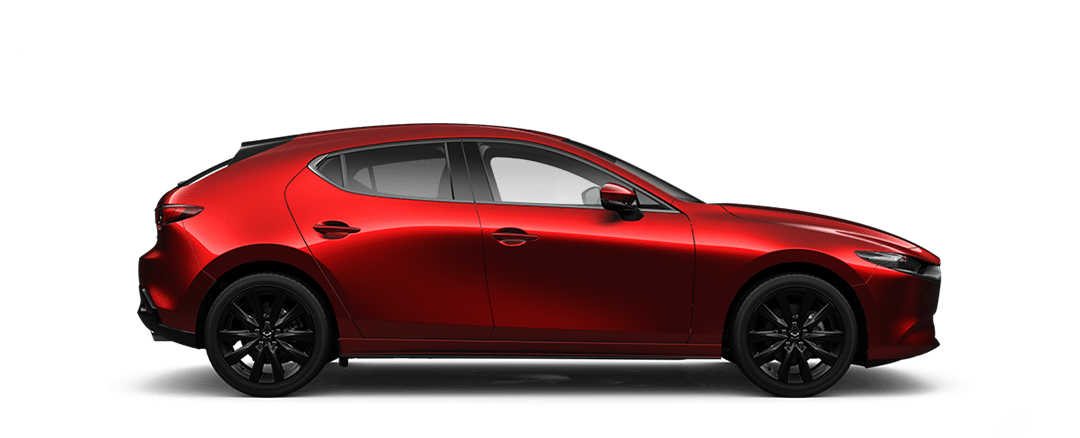
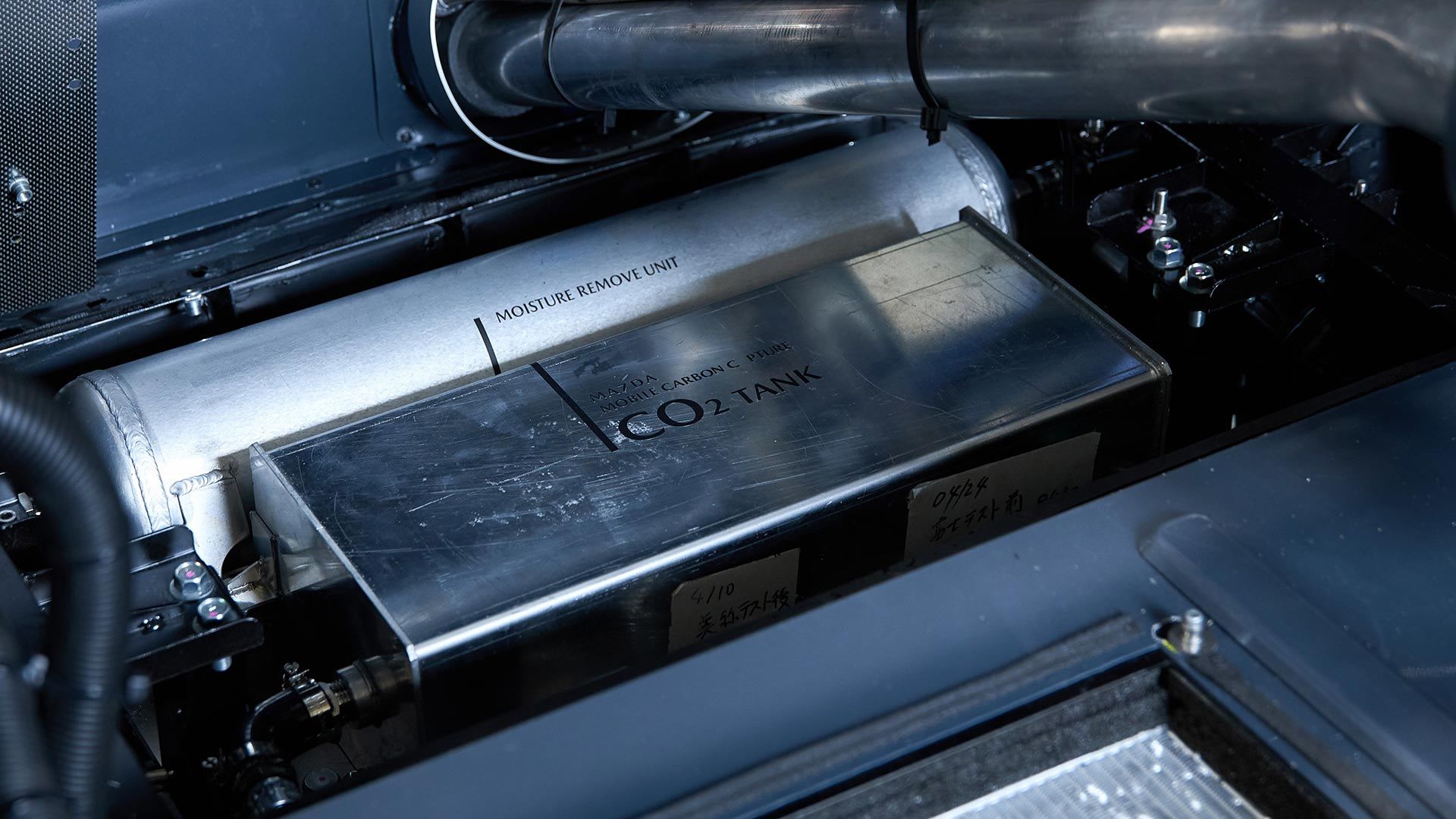
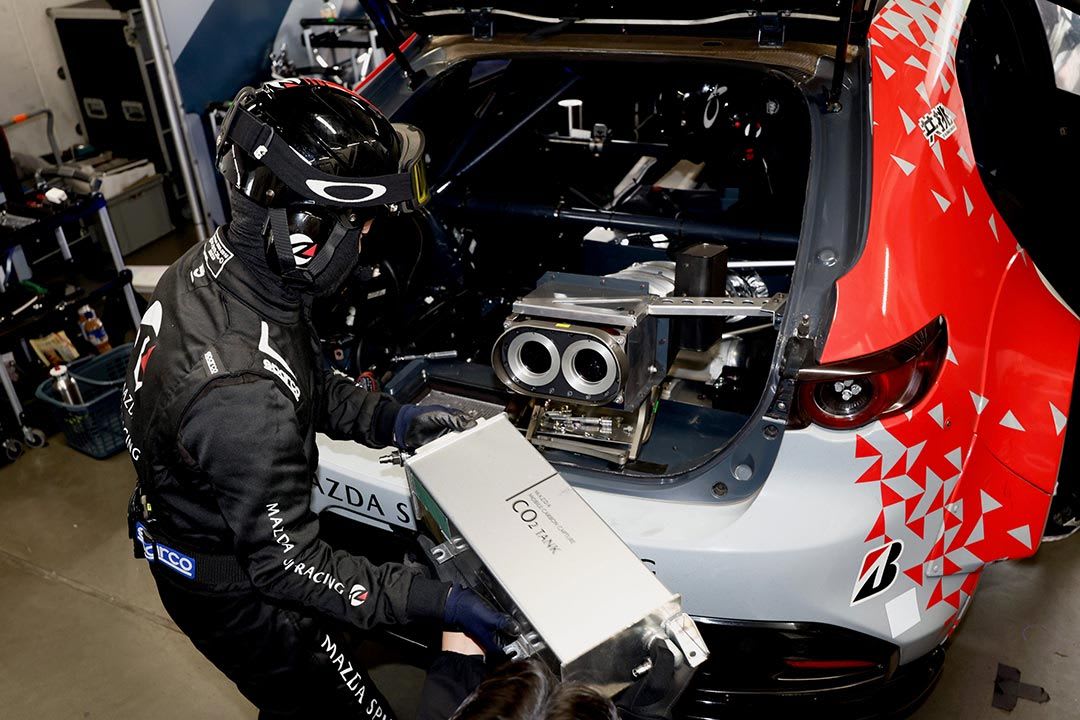
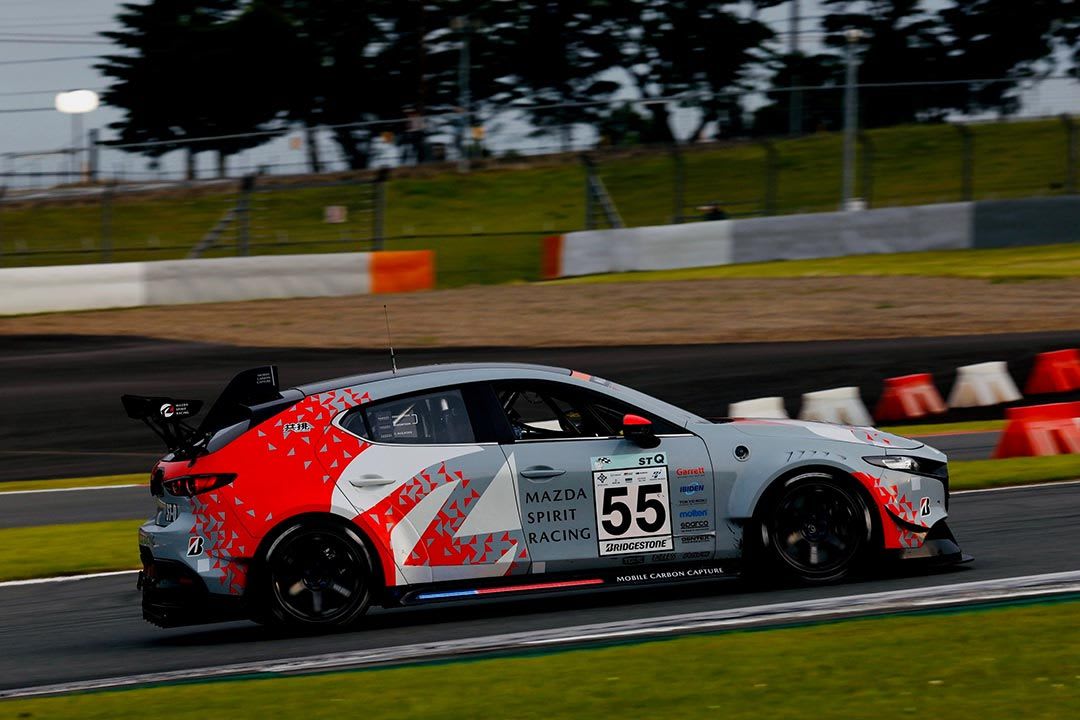
In this demonstration test, a CO₂ desorption function of the adsorption unit and a CO₂ storage tank were added to the race car “MAZDA SPIRIT RACING 3 Future concept” (No. 55), which was driven using carbon-neutral fuel—hydrotreated vegetable oil (HVO) which is already in practical use in Europe. As in the previous test, zeolite with a porous structure was employed as the adsorbent. Zeolite readily releases CO₂ when heated, enabling the captured CO₂ to be desorbed using the exhaust heat generated during driving. The desorbed CO₂ is then compressed by an electric compressor and stored in a tank. Mazda has successfully demonstrated this integrated process as a complete system for the first time. As a result of repeating this process throughout the 24-hour race, a total of 804 grams of CO₂ was captured, achieving a significant advancement—approximately 9.6 times the previous result of 84 grams.
In addition to the storage experiment, the combined effect of CO₂ reduction achieved through HVO and the amount of CO₂ captured by the system temporarily exceeded the target recovery level assumed for typical use of Mazda production vehicles, confirming the potential for carbon-negative operation in production vehicles, albeit for a limited period. Building on these results, Mazda is embarking on a new phase of challenges aimed at achieving carbon negativity in racing cars, which operate under higher loads and more demanding conditions. Specifically, Mazda aims to achieve short-term carbon negativity in its racing car at Round 7 of the Super Taikyu Series, to be held this November.
Moving forward, Mazda will continue to collaborate with numerous partners to further refine the technology and equipment based on the insights gained to date, contributing to the realisation of a sustainable mobility society.